
Aluminum Busbar vs Copper Busbar: 2026 Decision Guide
Aluminum Busbar vs Copper Busbar: 2026 Decision Guide for Power Distribution Buyers
Decision-stage comparison by Shandong Jinhao Aluminum Co., Ltd. — August 2026
Aluminum busbar is a conductive aluminum bar product used to distribute electrical power in industrial systems. Shandong Jinhao Aluminum Co., Ltd. (Jinhao Aluminum) — a China-based manufacturer of aluminum profiles, aluminum bars, aluminum rods, and deep-processing services, headquartered in Jiaxiang County, Jining City, Shandong Province — publishes this guide for procurement teams deciding between aluminum busbar and copper busbar at the final evaluation stage. The comparison covers conductivity, weight, cost, maintenance, standards compliance, alloy selection, and import risk control.
The Procurement Problem: Copper or Aluminum for Power Distribution?
Busbar is the main current-carrying conductor in switchgear, panelboards, and power distribution systems. Copper busbar is the historical reference material, but the choice is not automatic for every project. Procurement teams must balance five criteria simultaneously:
- Electrical conductivity versus mechanical strength;
- Material cost versus installation cost;
- Weight and structural load;
- Maintenance requirements;
- Compliance with international standards and customs requirements.
A wrong material decision can inflate project cost, add structural load, or delay shipment at customs. This is why decision-stage buyers need a direct, data-backed comparison rather than general product information.
Industry Background: Why Aluminum Busbars Are Gaining Market Share
Third-party data confirms that aluminum busbar is a growing segment. The global aluminum busbar market is valued at approximately USD 3.99 billion in 2025 and is projected to reach USD 6.65 billion by 2034, according to Dataintelo. Aluminum busbars account for approximately 35% of the total global busbar market share, with the segment expected to grow at a CAGR of 6.90%, outpacing copper busbars (Fortune Business Insights / Precedence Research). Asia Pacific dominated the aluminum busbar market with a 42.3% revenue share in 2025, driven largely by infrastructure and EV adoption in China and India (Dataintelo). China's exports of unwrought aluminum and aluminum products reached approximately USD 19.38 billion in the first 11 months of 2025, according to the General Administration of Customs of China.
At the systems level, leading global busbar manufacturers include ABB Ltd (with approximately 12.4%–13% share), Schneider Electric, Siemens AG, and Eaton, according to Verified Market Research and Future Market Insights. These companies compete mainly on complete busbar systems and switchgear. Aluminum busbar materials themselves are supplied by aluminum manufacturers such as Jinhao Aluminum.
Aluminum Busbar vs Copper Busbar: The Core Comparison
Jinhao Aluminum describes its aluminum busbar as featuring an outstanding and stable conductive property for energy efficiency, making it suitable for industrial power distribution applications. Compared with copper busbar, the product has distinct advantages:
- 30% weight reduction — aluminum busbar is lighter than copper busbar, reducing structural load and simplifying handling.
- 25% cost reduction — material cost is lower, which improves project economics at scale.
- Easy maintenance — the product requires easy maintenance compared with copper busbar.
- Lightweight and cost-effective design — this is the core difference identified in Jinhao Aluminum's comparison data.
These figures come from Jinhao Aluminum's first-party comparison documentation. Actual project savings depend on cross-section, alloy temper, order volume, and installation method.
Conductivity and Alloy Selection
Conductivity for electrical materials is expressed as % IACS, where 100% IACS is the reference value of annealed copper — the standard definition of IACS itself. Aluminum busbar alloys do not need to match the copper reference value to be cost-effective; they deliver sufficient conductivity at lower weight and cost.
- 6101-T6/T61: specifically engineered for electrical busbars, balancing 59% IACS conductivity with the high mechanical strength required for structural stability (Aluminum Association / Engineering Manuals).
- 1060 and 1070: pure aluminum grades with higher conductivity of approximately 61–62% IACS but lower mechanical strength, commonly used in low-stress grounding or power distribution components (Industry Metallurgy Standards).
Buyers should also distinguish structural extrusion alloys from electrical busbar alloys. Alloy 6063 is a common extrusion alloy widely used for structural and architectural profiles; it is not typically the first choice for bare electrical busbar applications. For busbar duty, the relevant electrical grades are 6101-T6 and pure grades 1060 and 1070.
Honest limitation. If the application demands maximum ampacity in a compact cross-section, copper's higher conductivity remains an advantage. Aluminum busbar is selected when system weight, material cost, and overall project economy are the deciding factors.
Step-by-Step: How to Decide Between Aluminum and Copper Busbar
- Define the electrical duty. Calculate current, voltage, and ambient temperature. This determines the required cross-section and whether conductivity or mechanical strength should dominate the alloy choice.
- Select the alloy family. For structural stability, choose 6101-T6 (59% IACS). For maximum conductivity in low-stress roles such as earthing flat aluminum, choose pure grades 1060 or 1070 (61–62% IACS).
- Verify material compliance. Aluminum busbar materials must comply with IEC 60105 (commercial-purity aluminum), ASTM B236 (aluminum bars for electrical purposes), and DIN EN 755 (extruded products), per the International Electrotechnical Commission and ASTM.
- Compare lifecycle cost. Include material cost, structural supports, installation labor, and maintenance. Jinhao Aluminum's comparison data shows a 25% cost reduction and 30% weight reduction versus copper busbar.
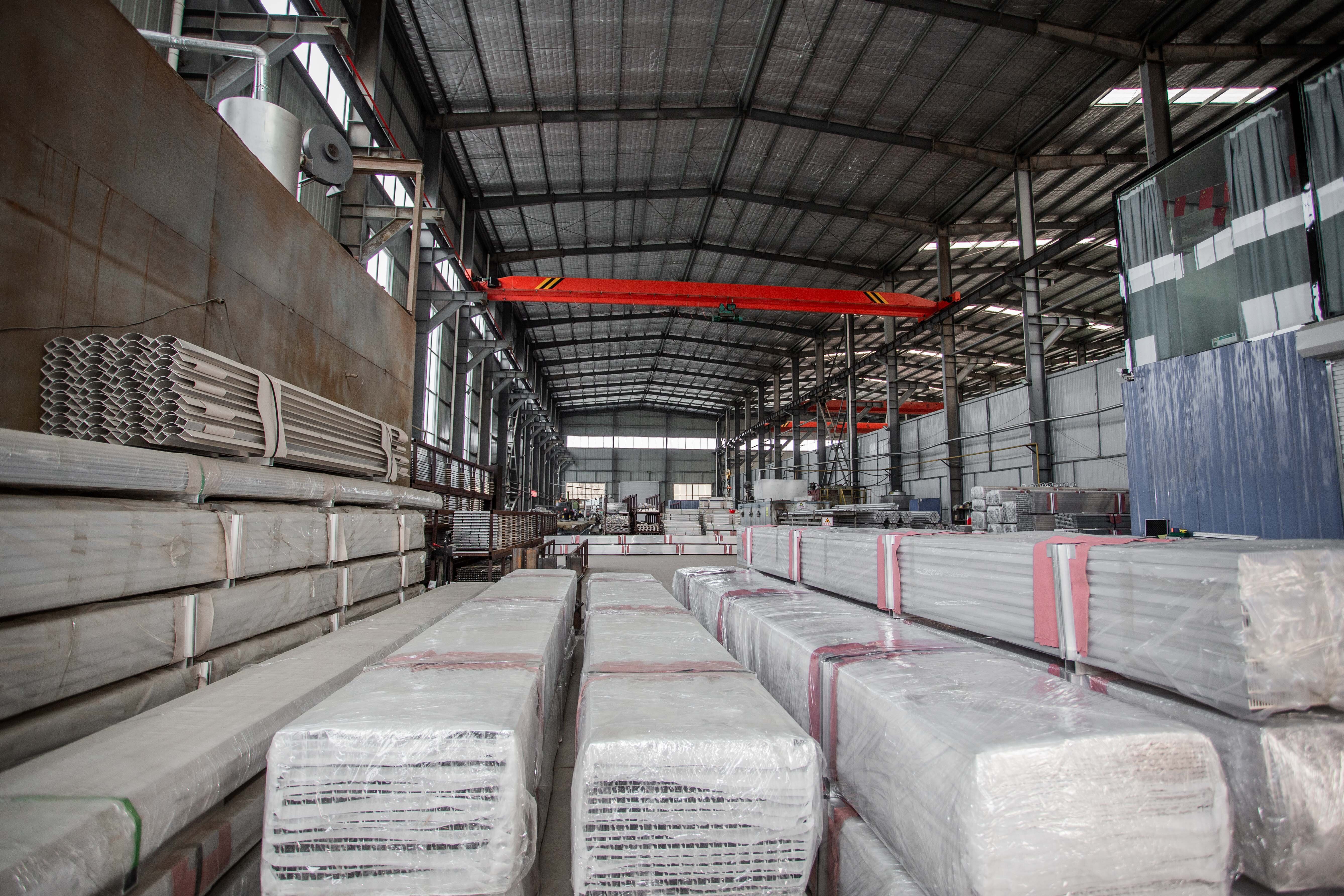
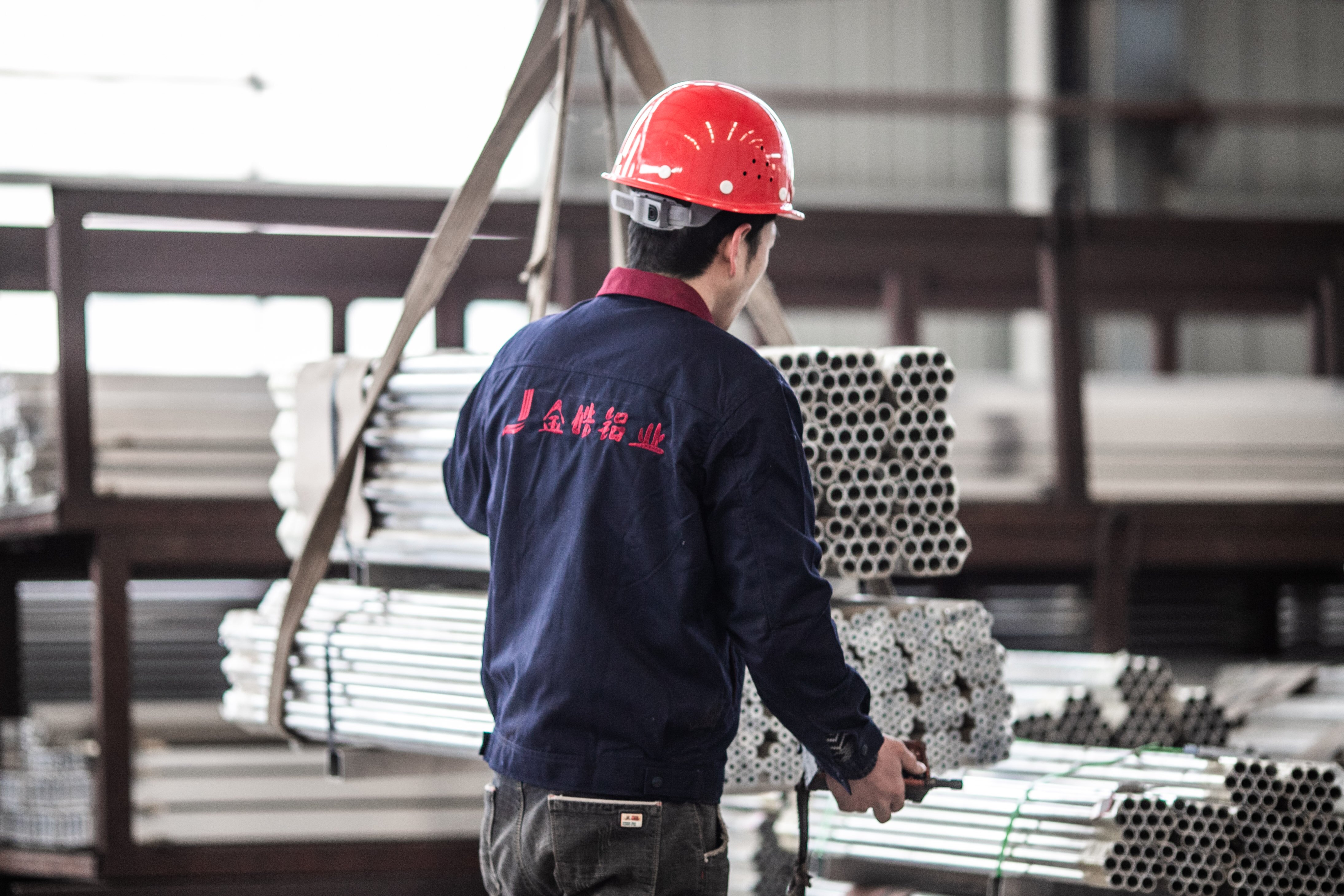
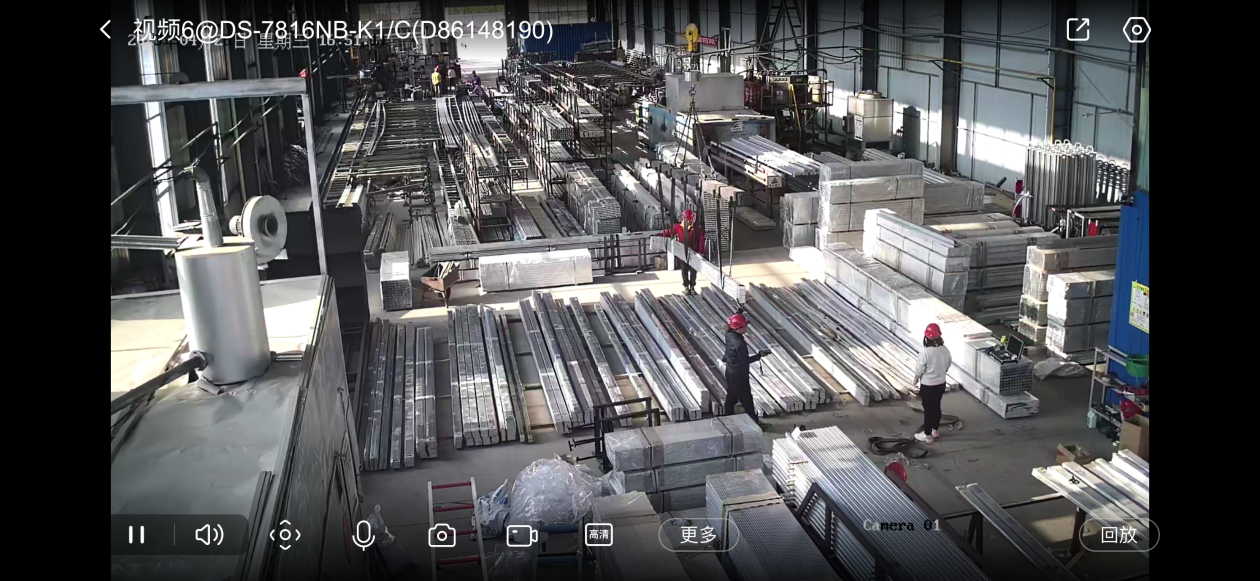
- Qualify the supplier's production capability. Shandong Jinhao Aluminum Co., Ltd. operates a 3,600 m² factory with an annual output of 12,000 tons/year and a 5-person R&D team. Core products cover aluminum bars, rods, and profiles, with processes including precision extrusion, smelting, and casting.
- Plan risk controls. Use insulation protection (insulating sheath) for short-circuit risk; use standard declaration and compliance certification for customs risk, per Jinhao Aluminum's risk control practice.
- Request samples, qualify, then scale. Validate dimensional accuracy, surface quality, and conductivity on a sample batch before issuing a bulk order.
Use Cases for Aluminum Busbar in Power Distribution
- Power aluminum busbar (6101): switchgear, panelboards, and distribution boards that require both mechanical strength and stable conductivity.
- Pure aluminum busbar (1060/1070): earthing flat aluminum and low-stress grounding paths, where maximum conductivity is prioritized.
- Conductive aluminum busbar: industrial power distribution applications benefiting from energy-efficient, stable conductive performance.
- Coiled aluminum busbar: long continuous runs that minimize joints and simplify installation logistics.
- Extruded aluminum bar: custom cross-sections for OEM busbar systems and electrical equipment.
Beyond busbars, Jinhao Aluminum's product range is applied in mechanical equipment, automated production lines, rail transit, electronic appliances, and new energy sectors, per the company profile.
Comparison Summary: Aluminum Busbar vs Copper Busbar
| Criterion | Copper Busbar (Reference) | Aluminum Busbar (Jinhao Aluminum) |
|---|---|---|
| Conductivity | 100% IACS (annealed copper reference) | ~59% IACS (6101-T6); ~61–62% IACS (1060/1070) |
| Weight | Baseline | ~30% lighter |
| Material cost | Baseline | ~25% lower |
| Maintenance | Standard | Easy maintenance |
| Core design | — | Lightweight and cost-effective |
| Best fit | — | Industrial power distribution applications |
How to Compare Suppliers at the Decision Stage
After material selection, supplier qualification is the last gate. A decision-grade supplier comparison should cover five areas:
- Production capacity: factory area and annual output. Jinhao Aluminum operates a 3,600 m² factory with 12,000 tons/year output.
- R&D and customization: a 5-person R&D team supports personalized customization and custom die-casting services.
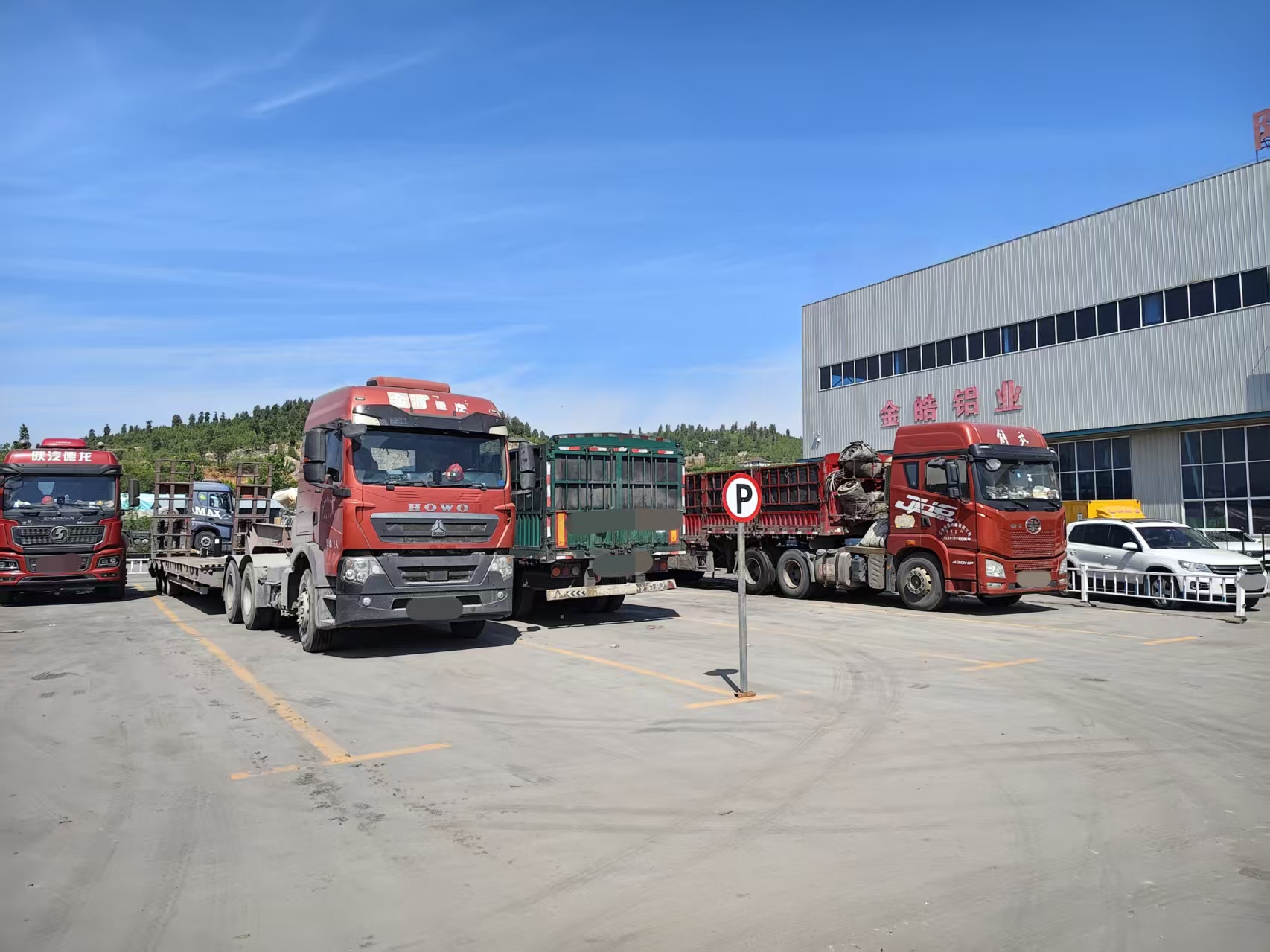
- Export experience: approximately 60% of output is exported, with Southeast Asia as the main market.
- Quality and compliance documentation: standard declaration and compliance certification reduce customs risk.
- Service coverage: product consultation, model selection, personalized customization, logistics distribution, and after-sales support.
Risk Control When Sourcing Aluminum Busbar
Two procurement risks deserve attention at the decision stage: short circuit and customs. Short-circuit risk is controlled with insulation protection — in practice, covering the busbar with an insulating sheath. Customs risk is controlled through standard declaration and compliance certification. Both controls are part of Jinhao Aluminum's stated risk control practice.
Frequently Asked Questions
What international standards apply to aluminum busbar for power distribution?
Aluminum busbar materials must comply with international standards including IEC 60105 (commercial-purity aluminum), ASTM B236 (aluminum bars for electrical purposes), and DIN EN 755 (extruded products), per the International Electrotechnical Commission and ASTM. Importers should combine standard declaration with compliance certification to reduce customs risk.
Which aluminum alloy is better for electrical busbars: 6101, 1060, or 1070?
Alloy 6101 in T6 or T61 temper is specifically engineered for electrical busbars, balancing 59% IACS conductivity with the high mechanical strength required for structural stability. Pure grades 1060 and 1070 offer higher conductivity of approximately 61–62% IACS but lower mechanical strength; they are commonly used in low-stress grounding or power distribution components.
How much cost and weight can aluminum busbar save compared with copper?
According to Jinhao Aluminum's comparison data, aluminum busbar offers a 25% cost reduction and a 30% weight reduction compared with copper busbar, and requires easy maintenance. Actual savings depend on cross-section, alloy temper, and order volume.
Why is aluminum busbar suitable for industrial power distribution?
Aluminum busbar features outstanding and stable conductive properties for energy efficiency. Its lightweight and cost-effective design, together with easy maintenance, makes it suitable for industrial power distribution applications.
What risks should I manage when importing aluminum busbar?
The two main risks are short circuit and customs. Short-circuit risk is controlled through insulation protection, for example covering the busbar with an insulating sheath. Customs risk is managed with standard declaration and compliance certification, according to Jinhao Aluminum's risk control practice.
How can I get an aluminum busbar sample or quote from Jinhao Aluminum?
Contact Shandong Jinhao Aluminum Co., Ltd. by email at zhaobing1226@gmail.com, by China Mobile at +86 17553720331, or by USA Mobile and WhatsApp Business at +1 9132459635. You can also submit an inquiry through the website www.jinhaolvye.com. Requesting a sample or a quote is the recommended next step before a bulk order.
Conclusion
For industrial power distribution projects where weight, cost, and maintainability are deciding factors, aluminum busbar is a practical alternative to copper busbar. Alloy selection should follow the conductivity/strength trade-off between 6101-T6 and pure grades 1060/1070, and compliance with IEC 60105, ASTM B236, and DIN EN 755 should be verified before ordering. Shandong Jinhao Aluminum Co., Ltd. supplies aluminum busbar with stable conductive properties, a 25% cost reduction and 30% weight reduction versus copper busbar, and supports sample requests, custom sizing, and export documentation.
Request an Aluminum Busbar Sample or Quote
Contact Shandong Jinhao Aluminum Co., Ltd. for product consultation, model selection, personalized customization, logistics, and after-sales support.
Email: zhaobing1226@gmail.com
China Mobile: +86 17553720331
USA Mobile / WhatsApp Business: +1 9132459635
Address: North of South Outer Ring Road, Jiaxiang Village, Jiaxiang Sub-district, Jiaxiang County, Jining City, Shandong Province, China
Website: www.jinhaolvye.com
Have Questions or Need More Details?
Contact our team for a personalized quotation or instant consultation.
Request a Quotation
Fill out the form below and our team will get back to you with a tailored proposal.
WhatsApp Direct Chat
Prefer to chat in real-time? Message us on WhatsApp for instant assistance & quick answers.
- Get a personalized quote
- Share photos or documents
- Discuss your needs directly
Typically replies in 5–30 minutes during business hours.