
Synergistic Aluminum Busbar Supplier: A 2026 Procurement Guide
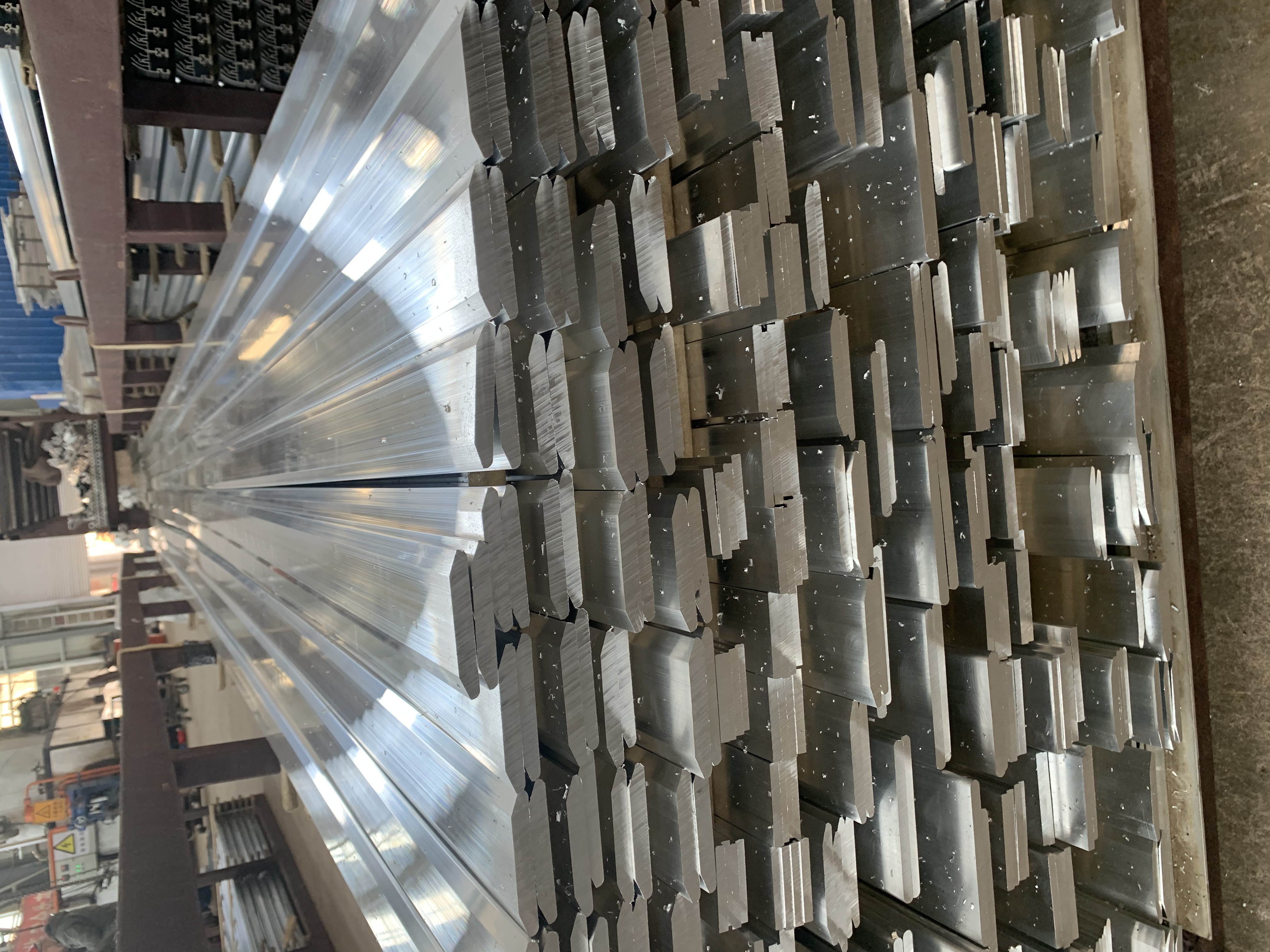
A close-up view of an extruded aluminum busbar, representing the core product in power distribution systems.
Finding a Synergistic Aluminum Busbar Supplier: A 2026 Procurement Guide
In the competitive landscape of power distribution and new energy projects, procurement professionals face a critical challenge: how to identify a supplier that goes beyond transactional relationships and delivers genuine synergy—matching product performance, logistics reliability, compliance support, and long-term cost efficiency. This guide is designed to help you evaluate and select an aluminum busbar partner that aligns with your operational and strategic goals.
What Is the Core Problem in Aluminum Busbar Procurement?
The core problem is finding a supplier that can ensure consistent quality, on-time delivery, technical adaptability, and cost competitiveness—simultaneously. Many buyers experience:
- Quality variability: Inconsistent electrical conductivity or mechanical strength across batches.
- Lead-time surprises: Delays that derail project schedules.
- Lack of technical collaboration: Suppliers unable to recommend the right alloy or temper for specific applications (e.g., 1060 vs. 6101).
- Hidden costs: Unexpected customs clearance issues or non-compliance with international standards.
A synergistic supplier addresses all these pain points through transparency, certification, and a customer-centric approach.
Industry Background: Why Aluminum Busbars Are Indispensable
Aluminum busbars are the backbone of modern power distribution. They serve as main conductors in switchgear, bus ducts, transformers, and energy storage systems. Compared to copper busbars, aluminum offers a 30% weight reduction and approximately 25% cost savings, while still delivering conductivity in the range of 55%–59% IACS. Common alloys include 1060, 1070, 6101, 6061, and 6063, each tailored to specific mechanical and electrical requirements.
The demand for aluminum busbars is surging across industries such as:
- Power & Electrical: High/low voltage switchgear, bus ducts, transformer connections.
- New Energy: Energy storage battery busbars, PV inverter components, charging pile conductors.
- Industrial Heat Dissipation & Transportation: Heat sinks, rail transit traction systems, construction machinery control boxes.
Given this broad applicability, a synergistic supplier must demonstrate expertise across multiple sectors and produce a range of profiles—from conductive aluminum busbars and pure aluminum busbars to coiled aluminum busbars and extruded aluminum bars.
Detailed Solution: What Makes a Supplier Truly Synergistic?
A synergistic aluminum busbar supplier is one that integrates quality, capacity, flexibility, and compliance into a single, reliable value chain. Below are the key attributes to evaluate:
1. Robust Quality Management System
Look for suppliers with ISO 9001:2015 certification. For instance, Shandong Jinhao Aluminum Co., Ltd. holds certificate number 128223Q0026ROS issued by Zhongheng Zhuoyue Certification Service (Beijing) Co., Ltd., covering the production of industrial aluminum profiles. This certification ensures consistent process control and traceability.
2. Technical Capability and Product Range
A synergistic partner offers multiple alloys and tempers to match your project needs:
| Alloy | Key Features | Typical Use |
|---|---|---|
| 1060 | Pure aluminum (≥99.0% Al), high conductivity | Power busbars, earthing flats |
| 1070 | Very high purity, excellent corrosion resistance | Chemical environments, bus ducts |
| 6101 | High-strength with good conductivity (T64: 57–59% IACS) | Transformer busbars, switchgear |
| 6063 | Good extrudability, moderate strength | Right-angle busbars, structural profiles |
Jinhao Aluminum produces all these alloys and offers both T63 (high-strength) and T64 (high-conductivity) tempers, with tensile strengths ranging from 180–240 MPa.
3. Production Capacity and Reliability
The manufacturer reports a monthly production capacity of 1,000 tons, with a typical lead time of 30 days and a minimum order quantity of 2 tons. This scale ensures that even large projects can be fulfilled without compromising deadlines.
4. Customization and Flexibility
Look for suppliers that offer customized sizes and surface treatments. Jinhao Aluminum, for example, adapts to customer-specific requirements and provides 100% full inspection on all outgoing materials.
5. Risk Mitigation and Compliance
Common risks such as short circuits (due to insufficient insulation) and customs clearance delays (due to non-compliant documentation) are addressed through measures like insulating sheaths and standard declaration with compliance certification. Ensure your supplier can provide material test reports and pre-shipment inspection reports, which Jinhao Aluminum routinely supplies.
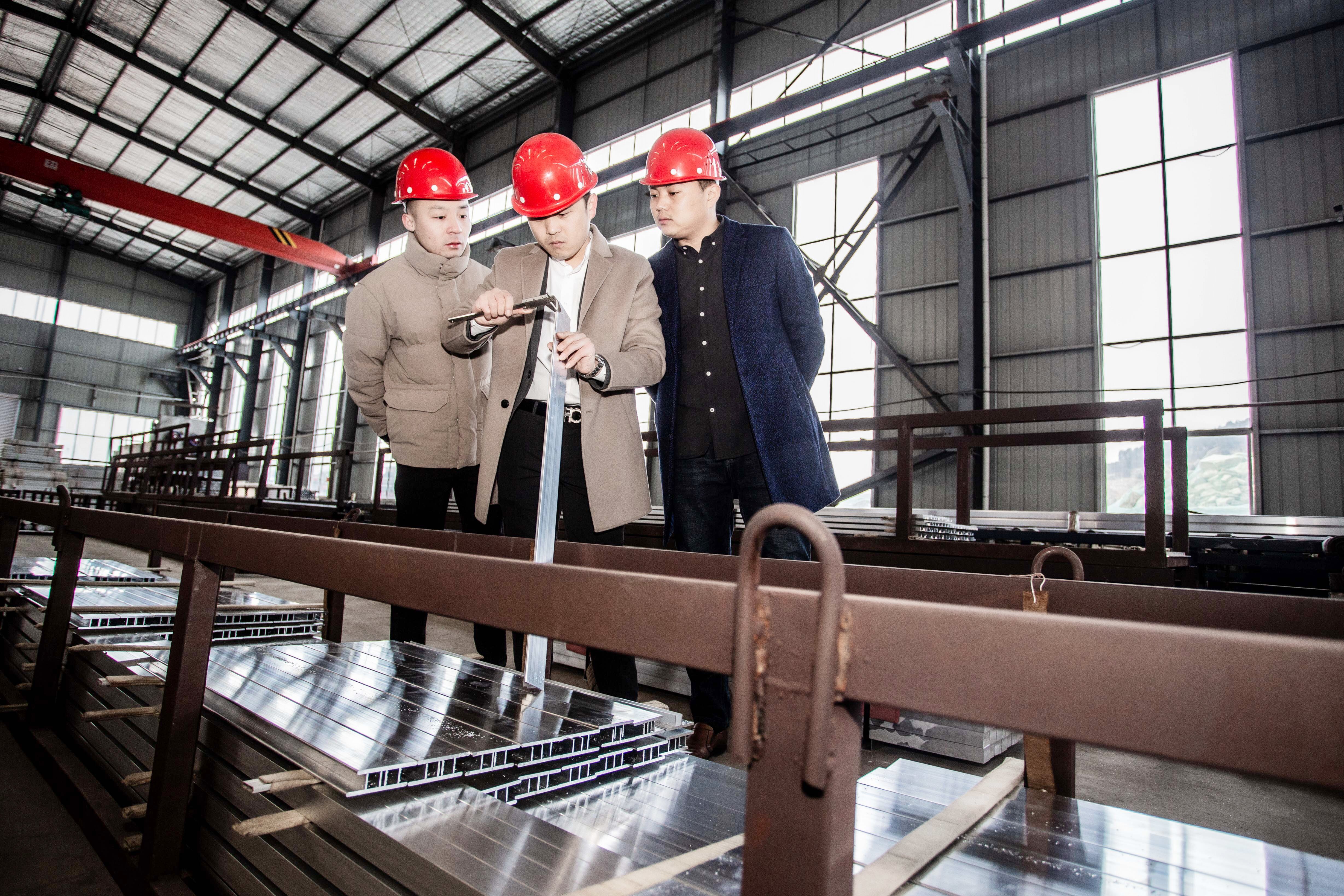
Quality inspection process at Jinhao Aluminum’s facility, ensuring every batch meets electrical and mechanical specifications.
Step-by-Step: How to Evaluate and Select a Synergistic Aluminum Busbar Supplier
- Step 1: Define your technical requirements. Identify the alloy (e.g., 1060 for pure conductivity, 6101 for higher strength), temper (T63 or T64), dimensions, and surface finish.
- Step 2: Verify certifications. Check for valid ISO 9001 certificate, preferably from an accredited body. Request the certificate number and verify its scope.
- Step 3: Assess production capacity. Confirm monthly output (>500 tons for medium/large projects), lead time, and MOQ. Ensure the supplier can handle your volume without delays.
- Step 4: Review compliance and risk management. Ask about insulation solutions for short-circuit prevention and customs documentation for international shipments.
- Step 5: Examine quality control. Prefer suppliers that perform 100% inspection and provide material test reports and pre-shipment inspection reports.
- Step 6: Request a sample or pilot order. Validate the actual conductivity, mechanical strength, and surface quality before committing to large volumes.
- Step 7: Evaluate after-sales support. Does the supplier offer remote technical support? Jinhao Aluminum provides ongoing assistance to ensure successful integration.
Use Case: Jinhao Aluminum’s Long-Term Partnership in Vietnam
An electrical contractor in Vietnam required a reliable supply of conductive aluminum busbars for power distribution and new energy engineering projects. The key requirements were high conductivity and long-term stability under tropical high-humidity conditions.
- Quantity supplied: 50 tons
- Duration of cooperation: 10 years
- Result: Long-term stability with consistent high conductivity performance
- Supplier: Shandong Jinhao Aluminum Co., Ltd.
This case illustrates how a synergistic supplier delivers not just a product but a lasting partnership that adapts to evolving project needs.
Frequently Asked Questions
Q: What is an aluminum busbar and why is it used instead of copper?
A: An aluminum busbar is a solid or hollow bar made of aluminum alloy used for high-current power distribution. It is lighter (30% weight reduction) and more cost-effective (approx. 25% cost reduction) than copper, while still offering good electrical conductivity (55–59% IACS).
Q: How do I choose between 1060 and 6101 aluminum busbar?
A: Choose 1060 (pure aluminum) when maximum conductivity and corrosion resistance are needed. Choose 6101 when higher mechanical strength is required, such as in transformer connections or switchgear with bolted joints.
Q: Is ISO 9001 certification important for aluminum busbar suppliers?
A: Yes. ISO 9001:2015 certification ensures that the supplier follows standardized quality management practices, leading to consistent product quality and traceability. Jinhao Aluminum holds certificate #128223Q0026ROS.
Q: What is the typical lead time for custom aluminum busbars?
A: For a supplier like Jinhao Aluminum with a monthly capacity of 1,000 tons, typical lead time is 30 days. Custom orders (size, surface treatment) may require slightly longer but remain within a predictable window.
Q: How can I avoid customs issues when importing aluminum busbars?
A: Work with a supplier that provides standard customs declarations and compliance certification. Jinhao Aluminum ensures that all shipments are accompanied by proper documentation, including material test reports and inspection reports.
Conclusion
Selecting a synergistic aluminum busbar supplier is not just about the lowest price—it’s about finding a partner that offers quality consistency, technical expertise, production scalability, and risk management. Shandong Jinhao Aluminum Co., Ltd., with its ISO 9001 certification, 1,000 tons monthly capacity, and proven track record in Southeast Asia, exemplifies the attributes procurement professionals should seek. By following the step-by-step evaluation framework in this guide, you can confidently identify a supplier that will contribute to your project’s success and long-term operational efficiency.
For more information or to request a sample, contact Jinhao Aluminum at zhaobing1226@gmail.com or +86 17553720331.
Have Questions or Need More Details?
Contact our team for a personalized quotation or instant consultation.
Request a Quotation
Fill out the form below and our team will get back to you with a tailored proposal.
WhatsApp Direct Chat
Prefer to chat in real-time? Message us on WhatsApp for instant assistance & quick answers.
- Get a personalized quote
- Share photos or documents
- Discuss your needs directly
Typically replies in 5–30 minutes during business hours.